Tag : Cygnus

WR 134

Wolf-Rayet Star WR 134

WR 134 is a Wolf-Rayet star located at about 6000 light years in constellation Cygnus. Wolf-Rayet stars are very bright (hundreds of thousands of times brighter than the Sun) and massive (more than 20 solar masses) variable stars that emit most of their energy in the ultraviolet and X-ray bands. These stars are quite rare: only a few hundreds of them are known to date. Wolf-Rayet stars are often surrounded by stellar-wind-formed nebulae, and WR 134 is one such case. […]

Beta Cygni - Albireo

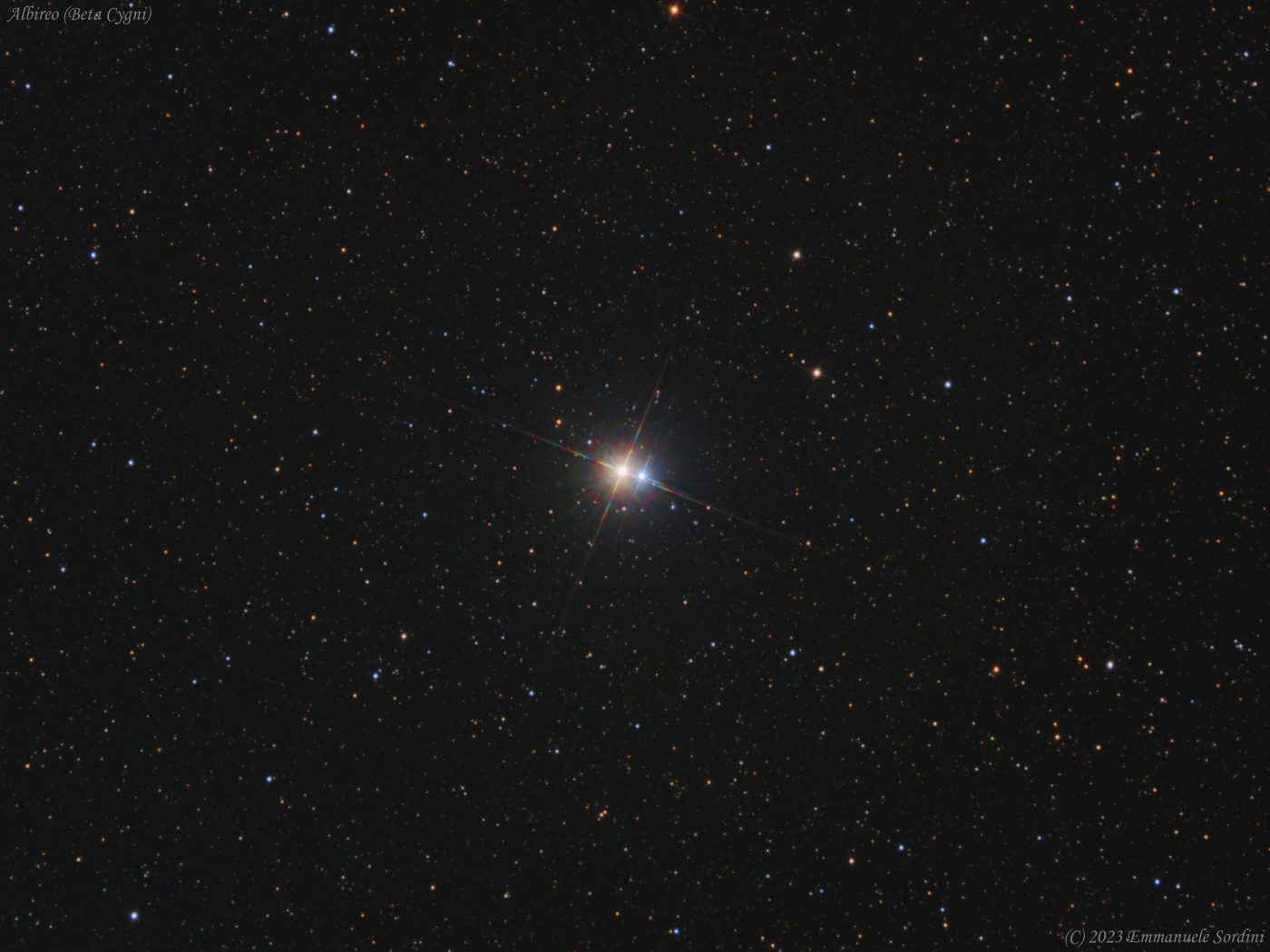
Albireo: A Gem In The Sky

Some stars in the sky are true gems. Albireo (aka Beta Cygni) is one such case. Albireo is a double star in constellation Cygnus. Shining at magnitude 3.2, it is in fact made up of a copper-red main component, with a fainter blue companion located at about 35 arcseconds. The striking color contrast probably makes Albireo the most beautiful double star in the whole sky. This image was acquired with a QHY 163M CMOS camera, a QHY filter wheel with […]

LBN 317 in Cygnus

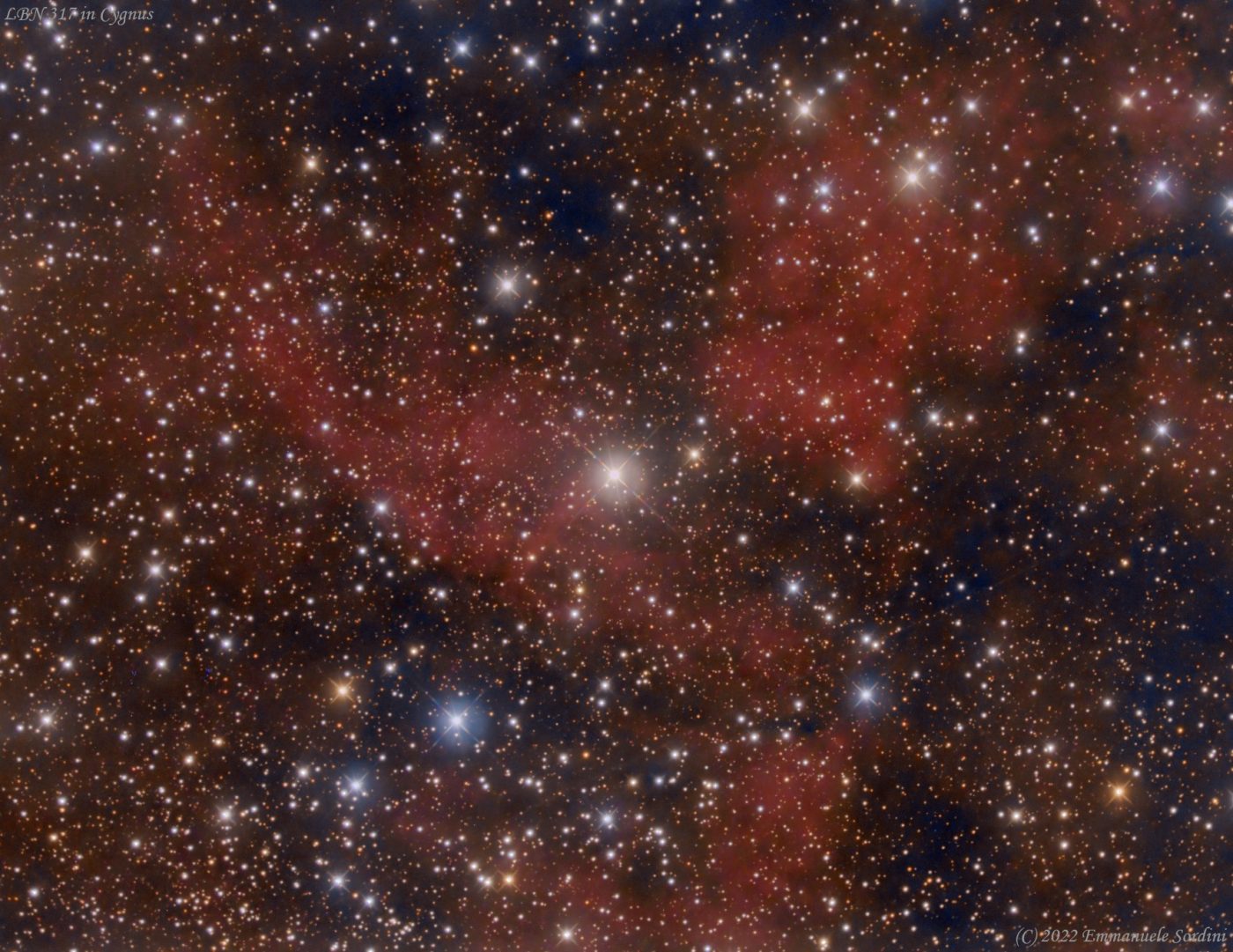
LBN 317 in Cygnus

Here’s a vintage image, dating back to July 2015 when I still used to image almost exclusively with DSLRs. It’s LBN 317, a medium-intensity H-alpha nebula located northwest of Deneb. Processing this image was quite challenging, as it’s plagued by strong halos around the brightest stars caused by a “full-spectrum” Canon 450D DLSR having been used for acquisition. Anyway I think old raw frames sometimes can produce pleasing results! This picture is a composite of 28 10-minute frames at 800 […]

NGC 6914 (vdB 131) and vdB 132

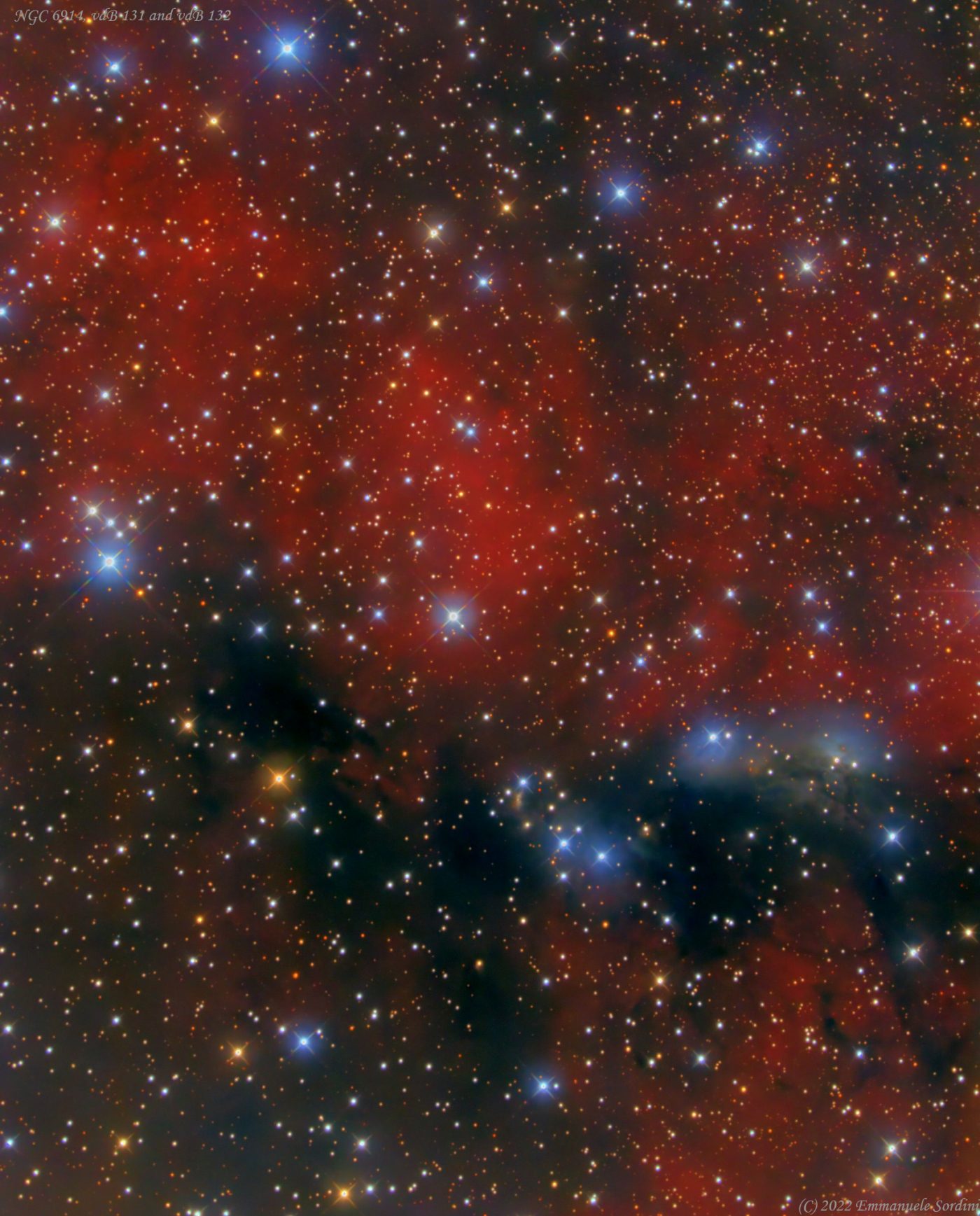
NGC 6914 (vdB 131) and vdB 132 in Cygnus

NGC 6914, also known as vdB 131, is a reflection nebula located in constellation Cygnus. It’s part of a bigger nebular complex comprising another reflection nebula, vdB 132, and several dark nebulae (LDN 897, 899 and 900). The whole complex is surrounded by one of the Milky Way’s H-alpha densest areas, about 2.5 degrees north of Gamma Cygni (Sadr). I imaged this area of the sky in July 2015 from one of Northwestern Italy’s darkest sites, Colle del Nivolet, located […]

Wide-field Sadr region (starless)

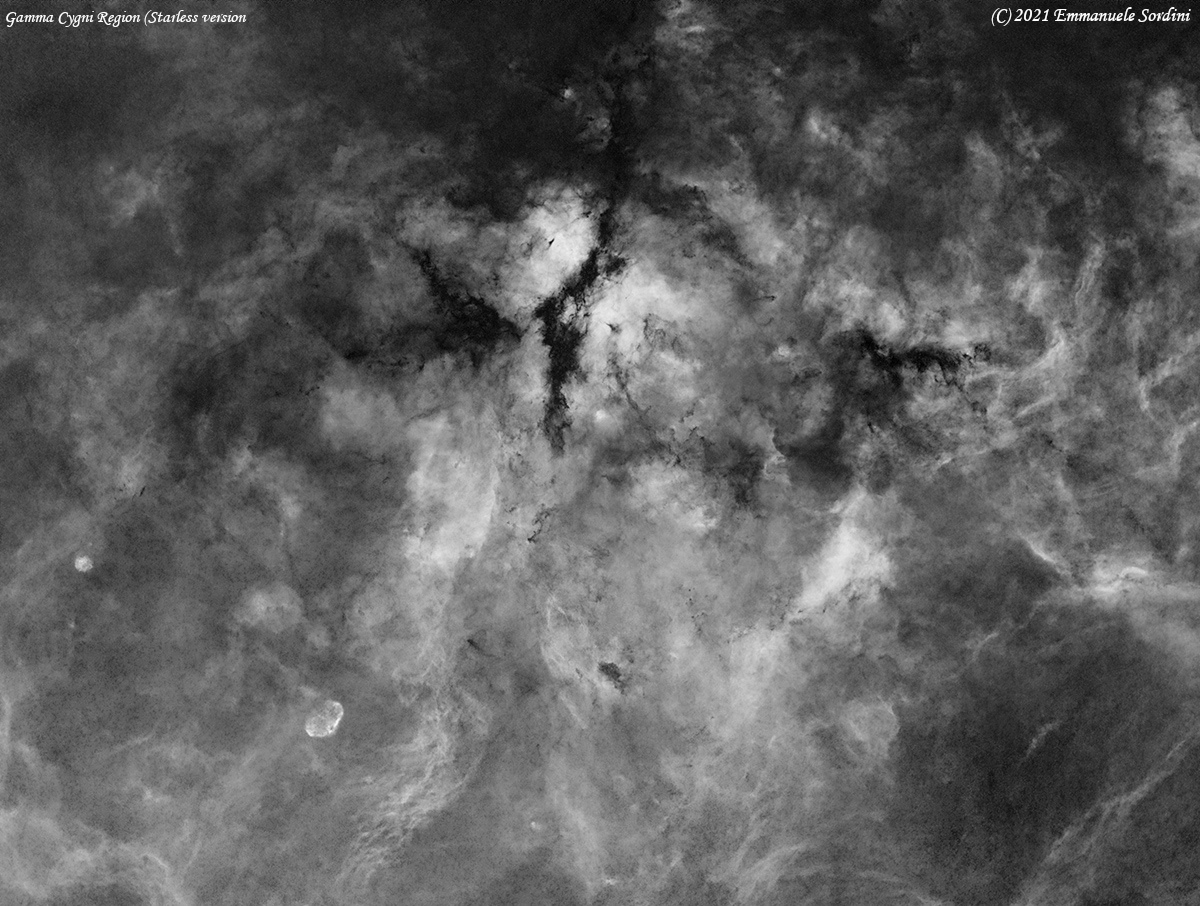
The Lacework of Cygnus

Cygnus is perhaps the constellation of the Northern Hemisphere where the Milky Way is brightest, featuring a host of deep-sky objects. These objects are mostly made up of H-alpha nebulosity, i.e. hydrogen that is excited and ionized by nearby young stars. H-alpha-emitting hydrogen shines bright red at a wavelength of 656.3 nm. H-alpha features are mostly not visible to the human eye, unless a wide aperture telescope is used together with a special filter: and anyway their brightness is almost […]

Caricamento...