
 Italiano
 EnglishItalianoEnglish
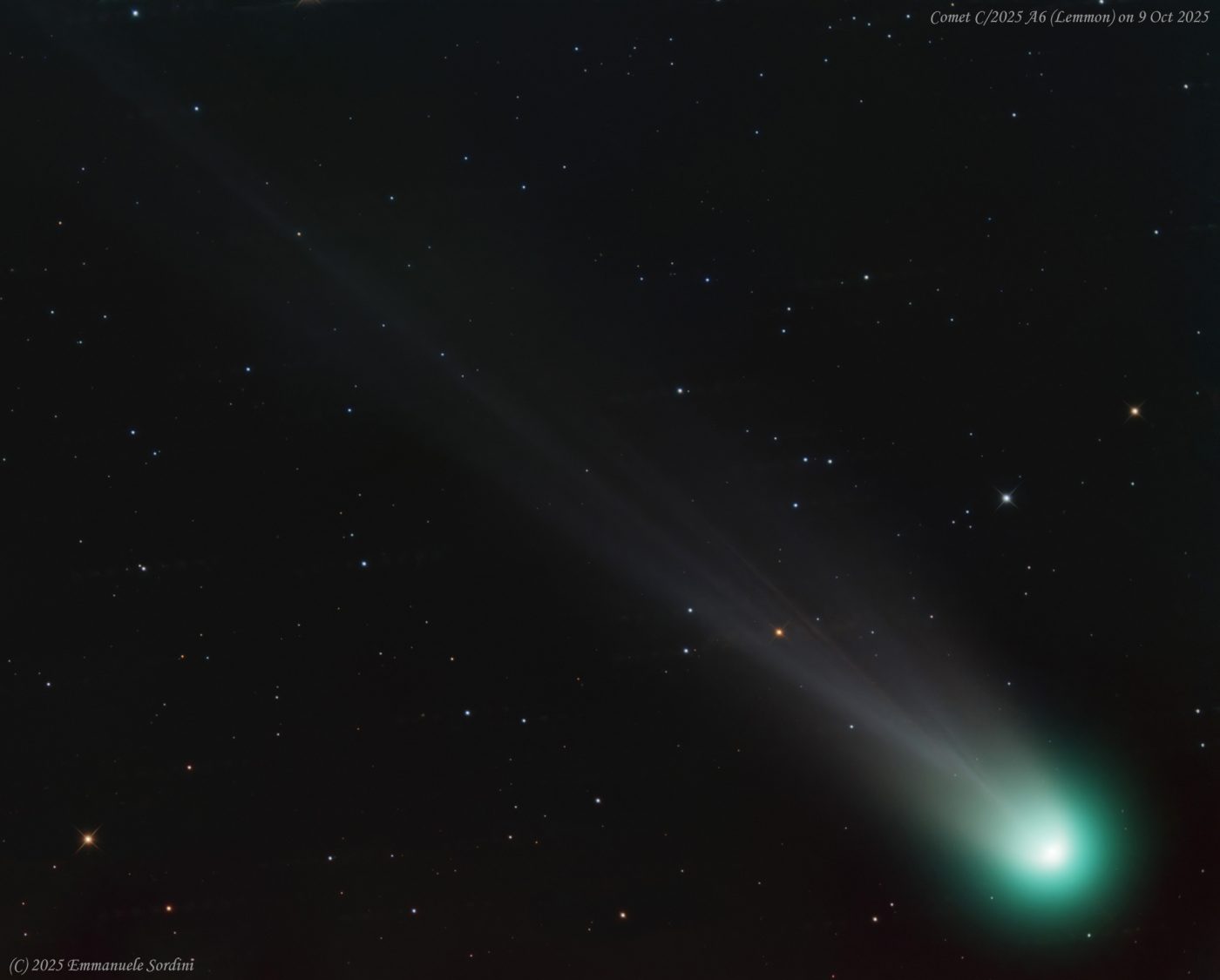
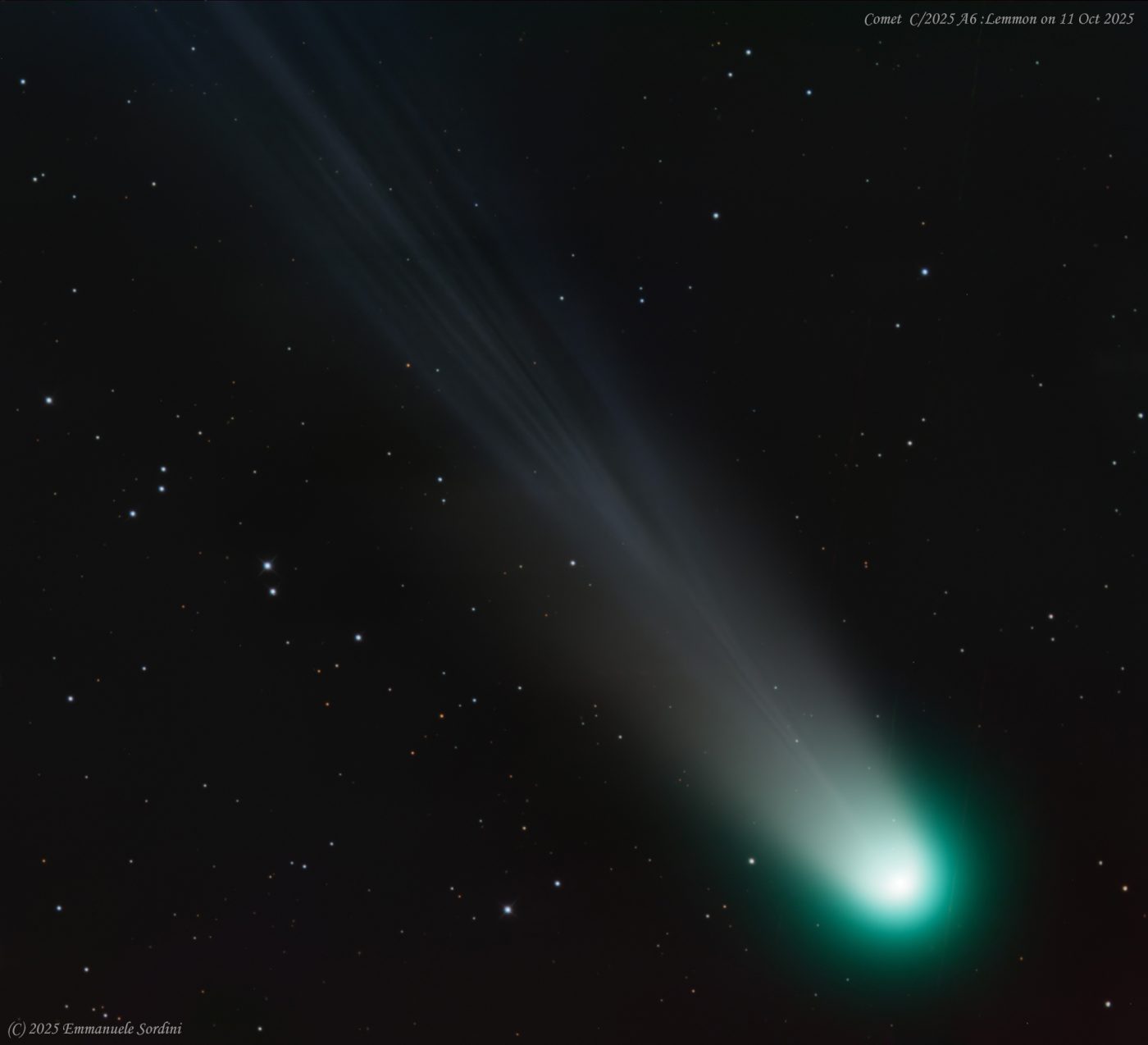
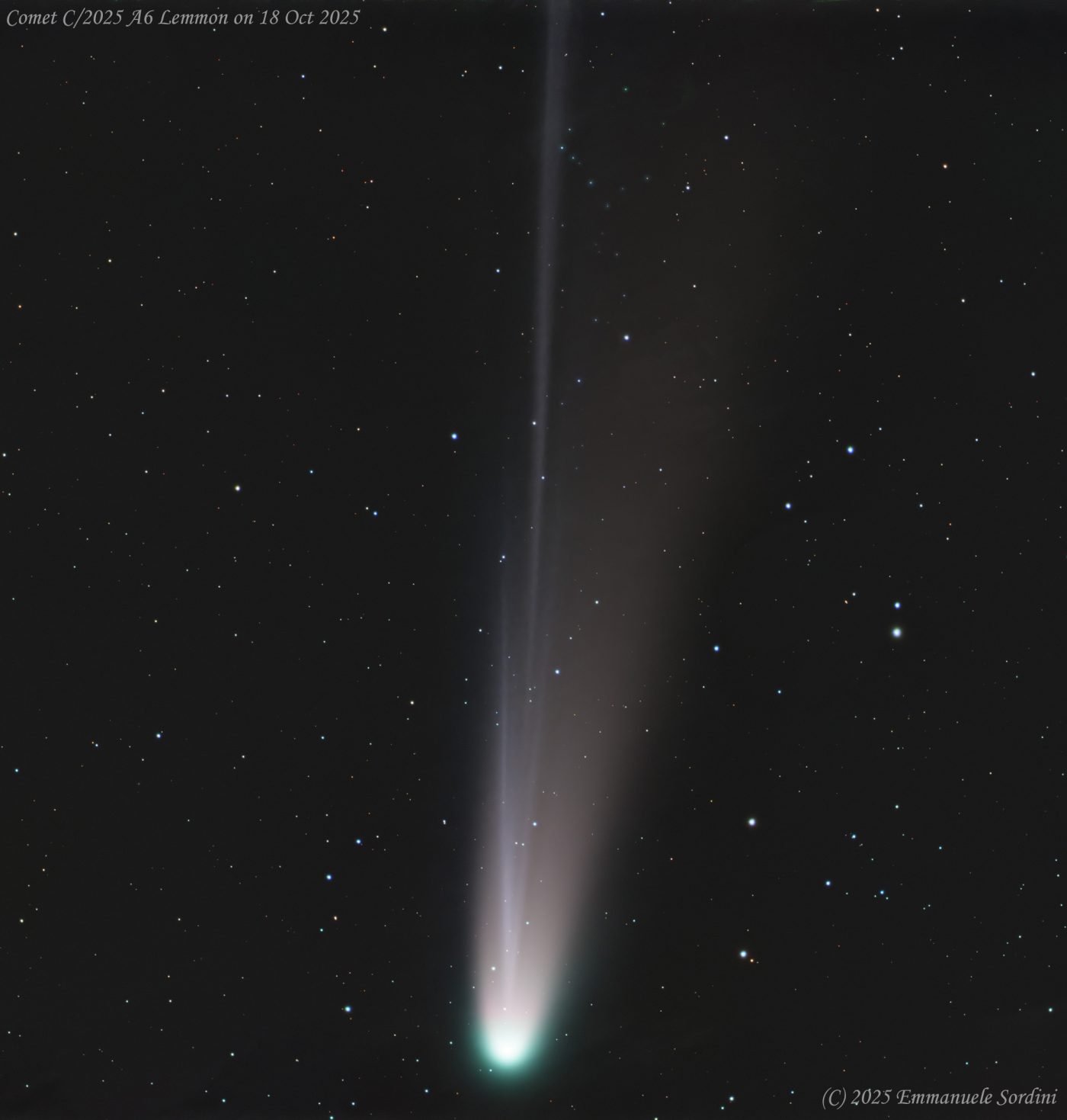
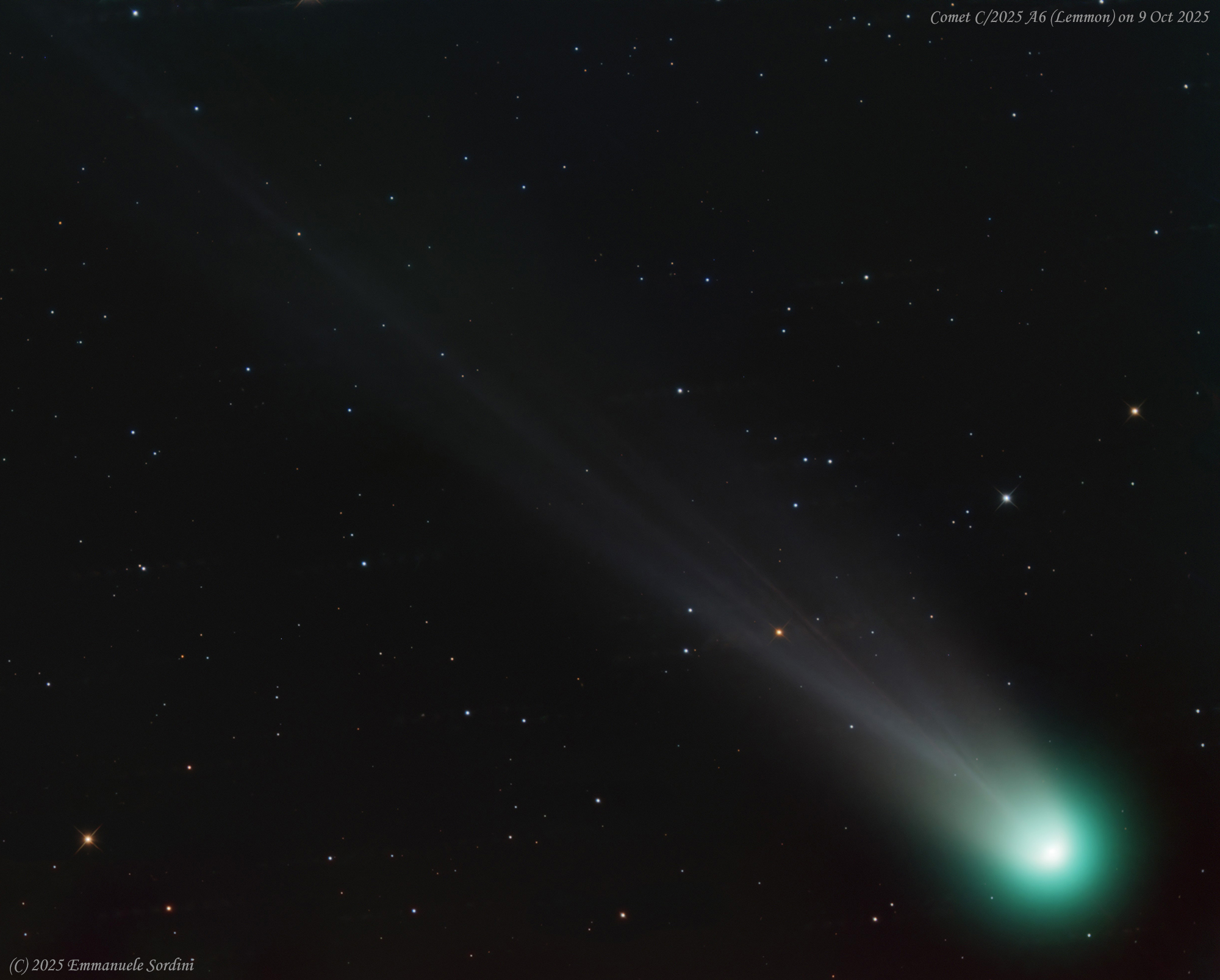
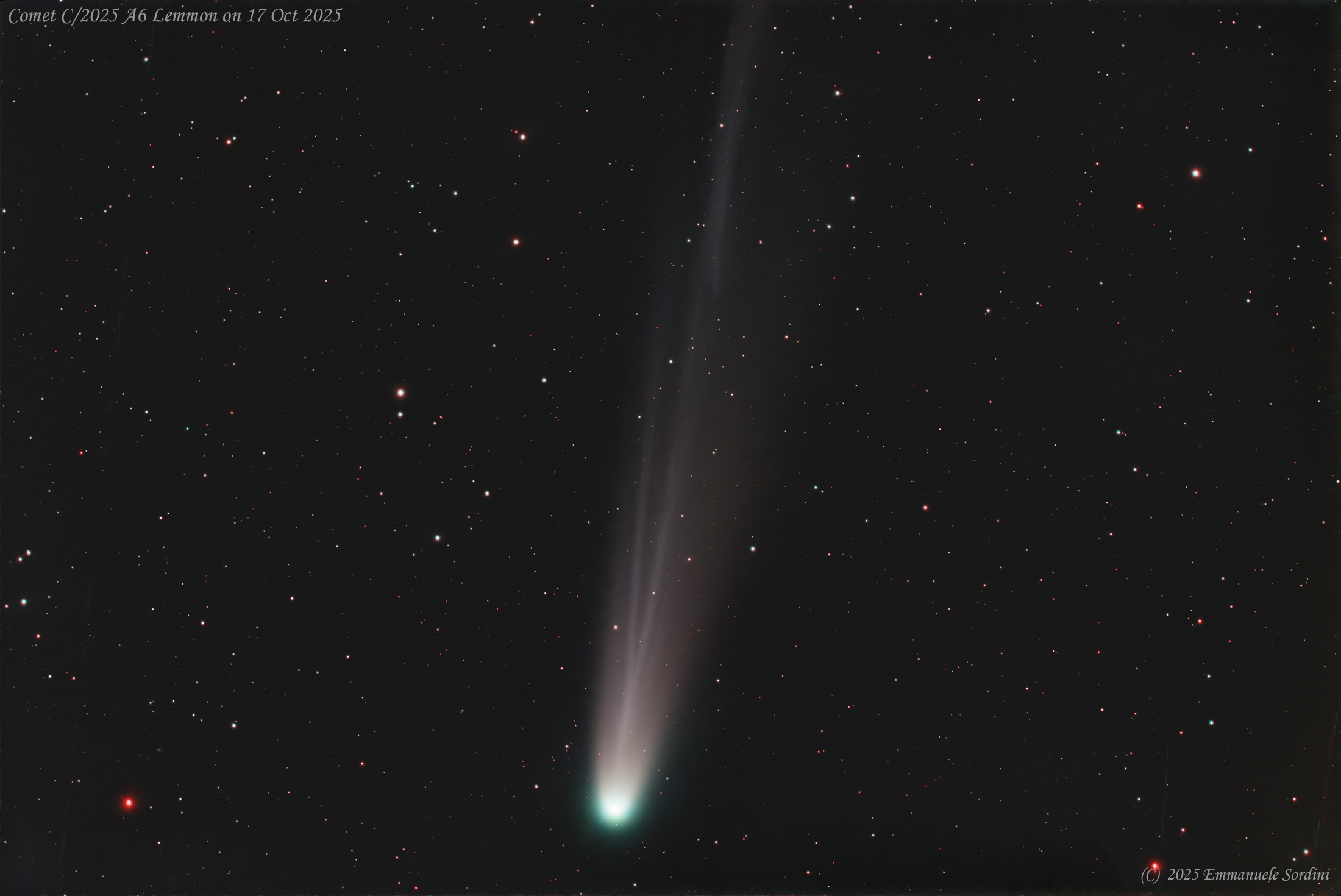
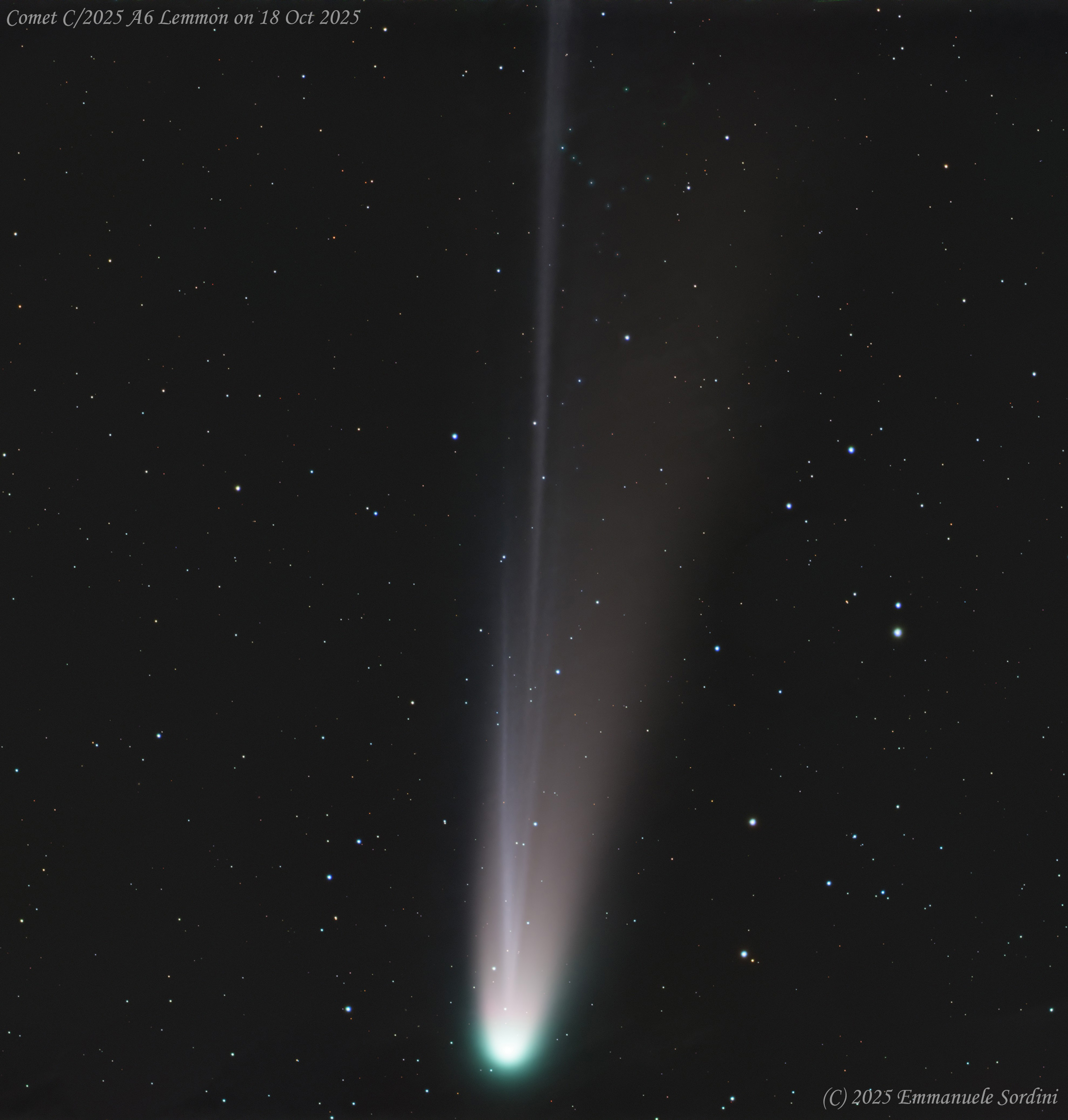
Comet C/2025 A6 (Lemmon) put on a beautiful show in October 2025 and turned out to be the brightest of the year, at least for northern hemishphere observers. It was visible only in the morning during the second half of September; at that time, I photographed it using my remote observatory in Aosta Valley (Italy). But it was in the weeks that followed that it truly gave its best.
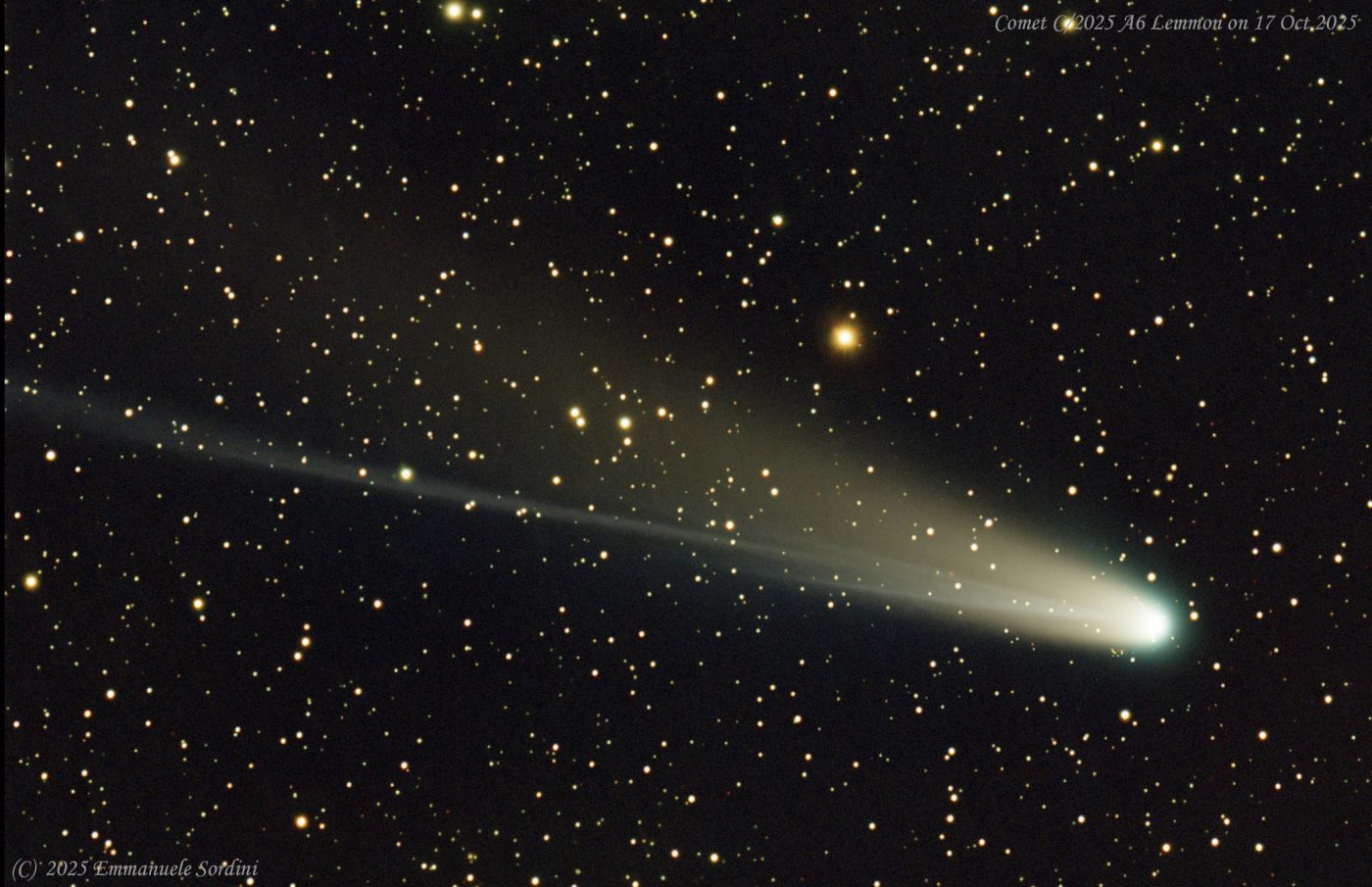
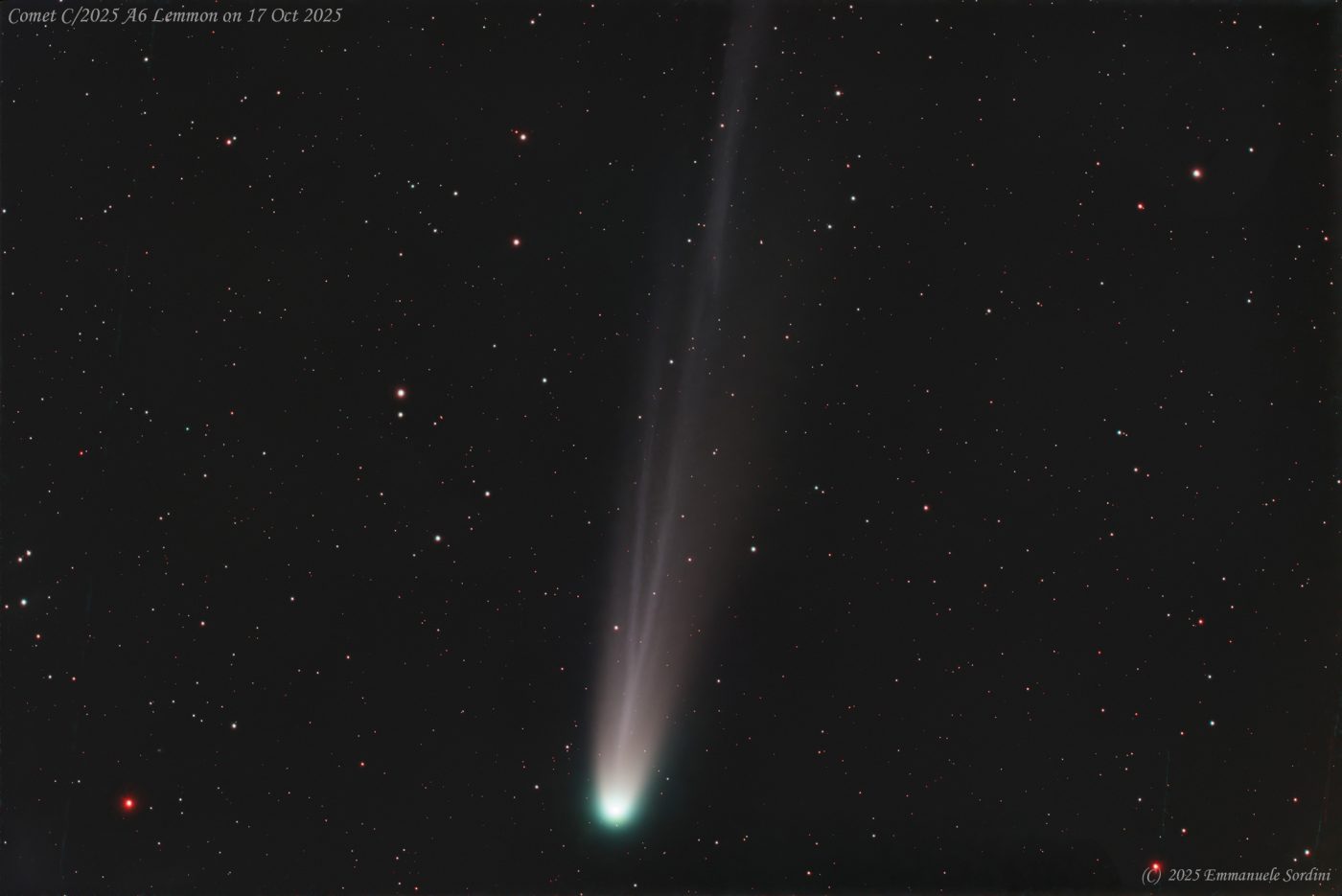
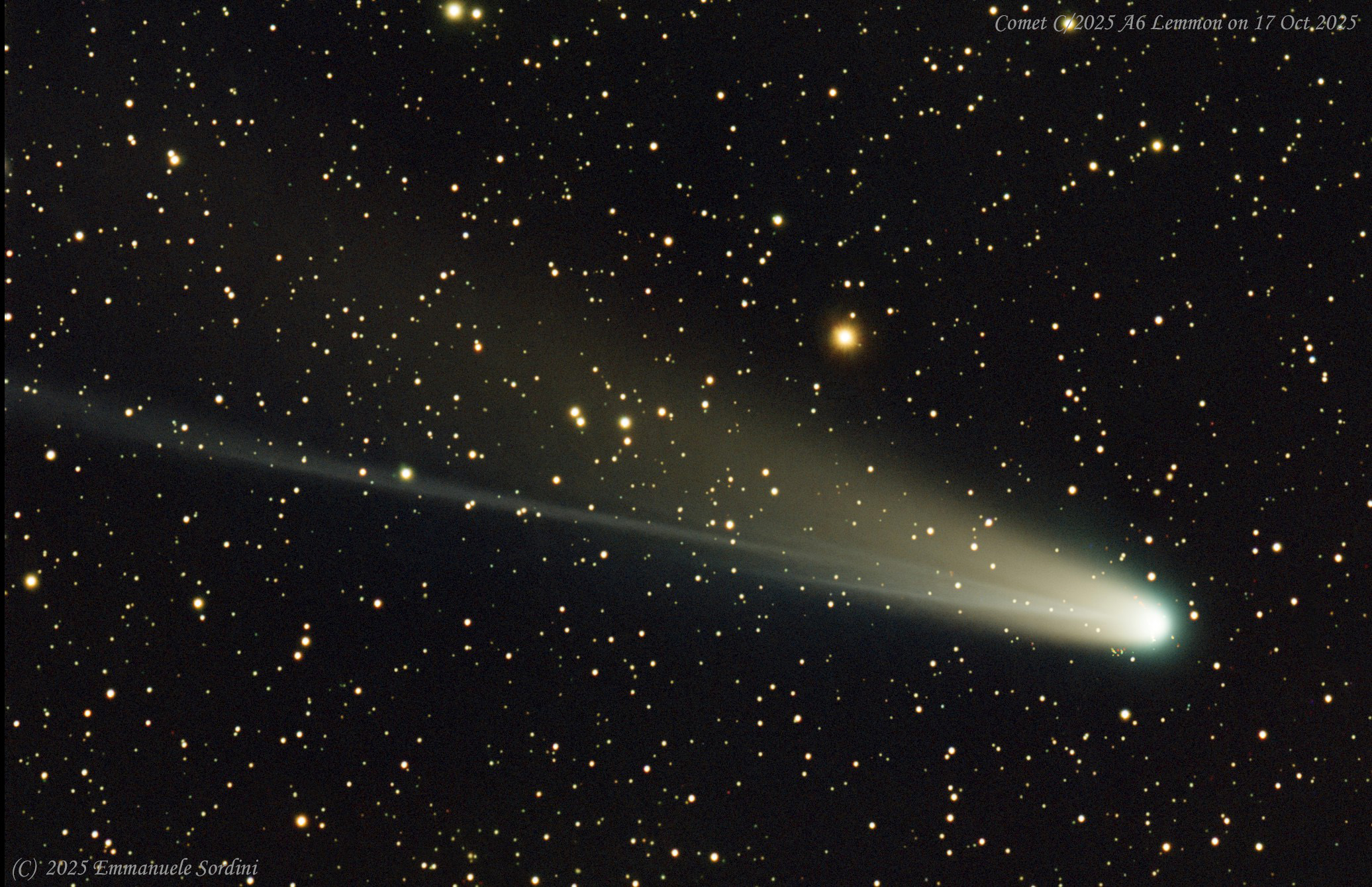
Its closest approach to Earth occurred on 21 October 2025 at 0.68 AU, and it reached perihelion on 8 November at 0.53 AU. For a few days around 17 October, its position between Boötes and Corona Borealis meant it could be seen both just before dawn and just after sunset by observers at mid-northern latitudes, like myself. As it continued its journey across the night sky, the comet moved into Ophiuchus and Serpens, becoming an exclusively evening object. From early November on, however, it kept its southbound course, crossing the celestial equator and eventually becoming visible only from the southern hemisphere.
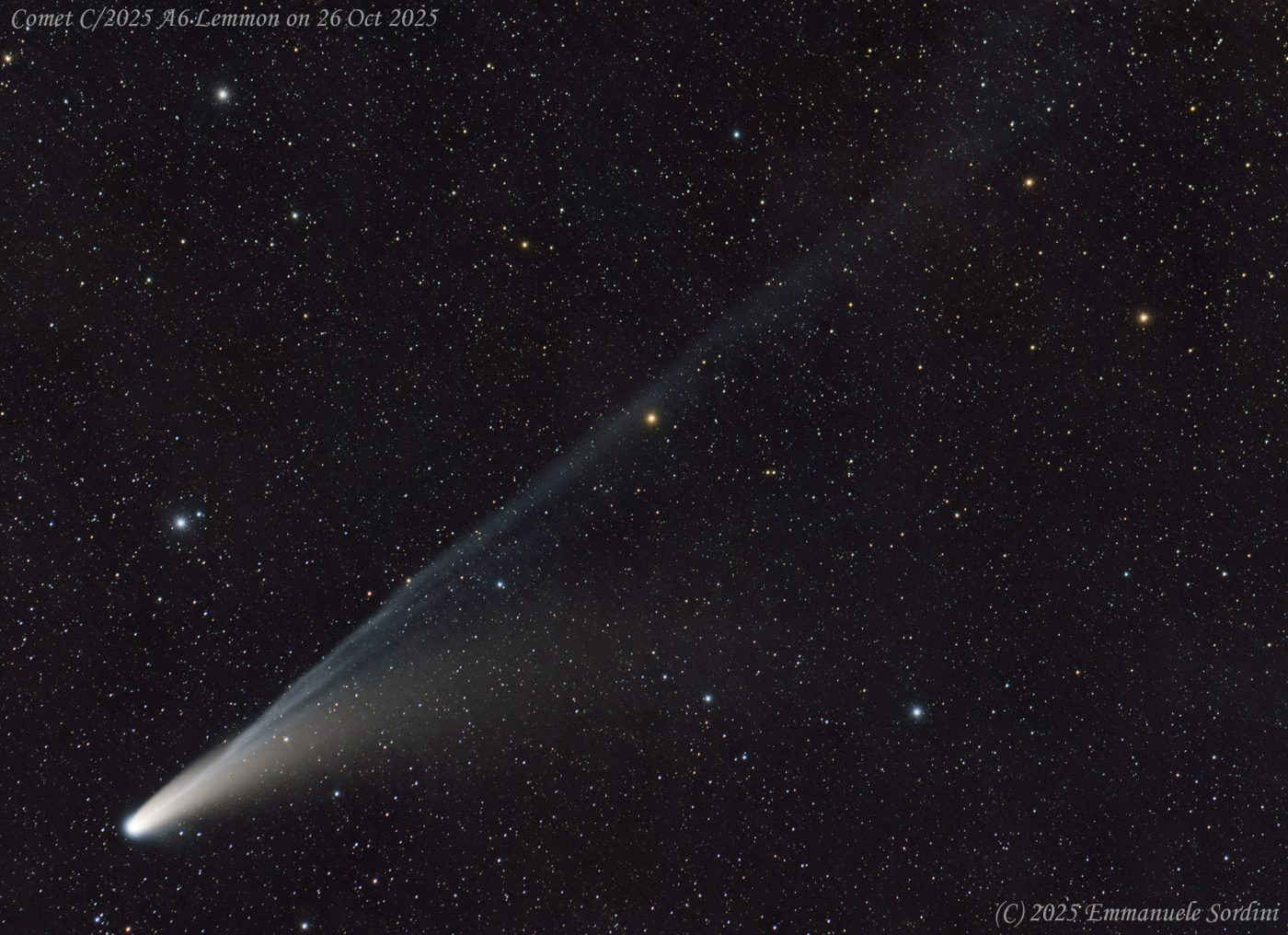
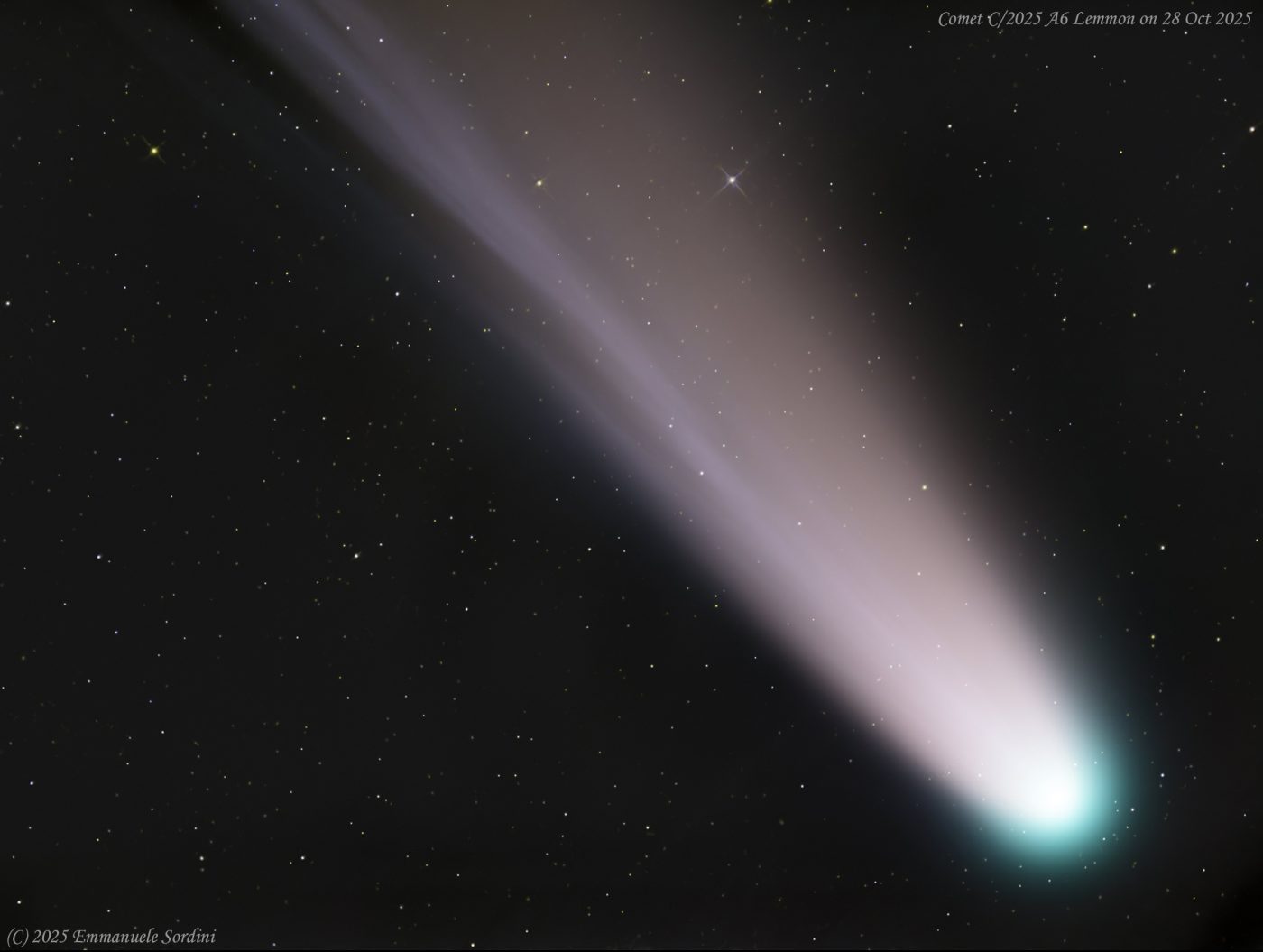
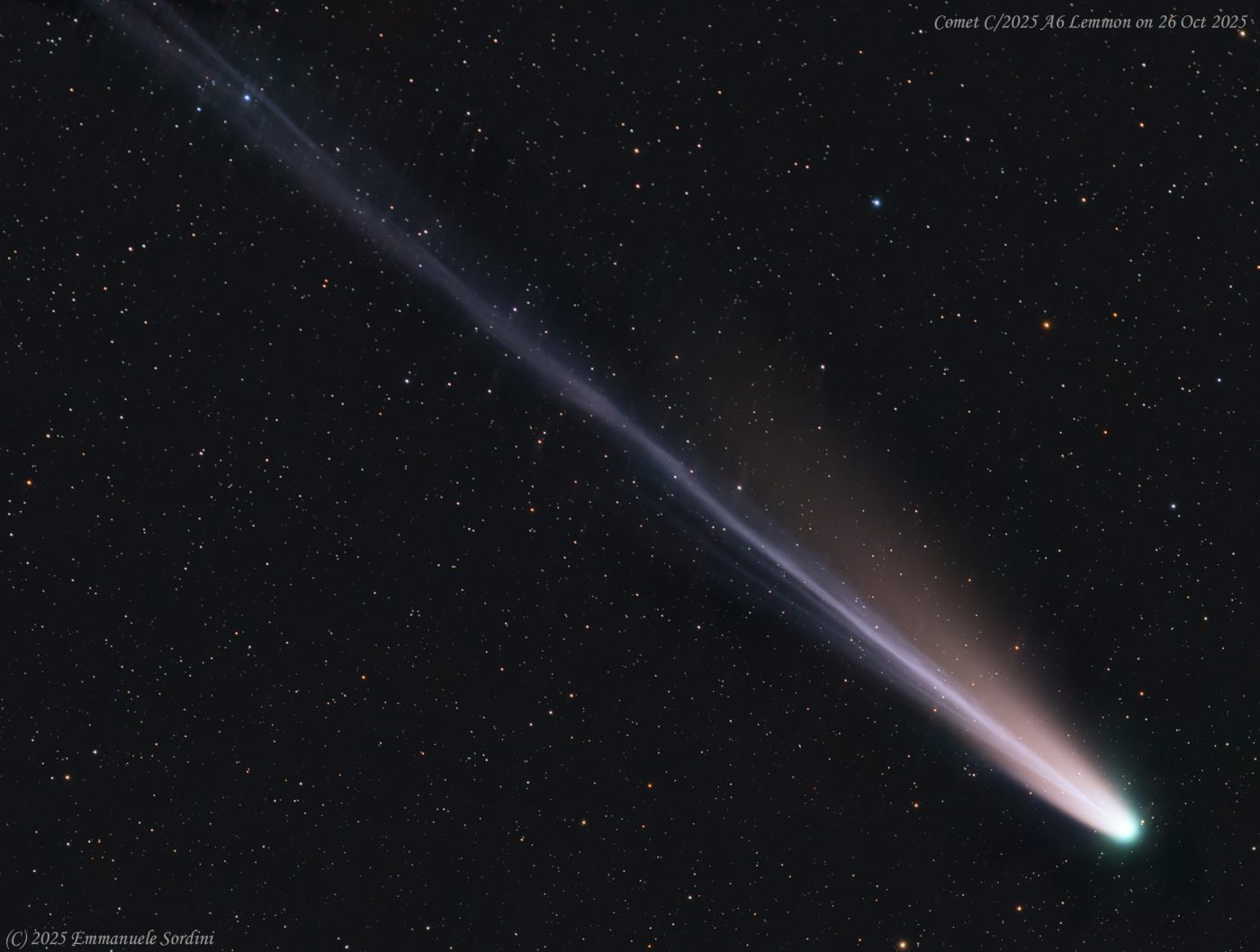
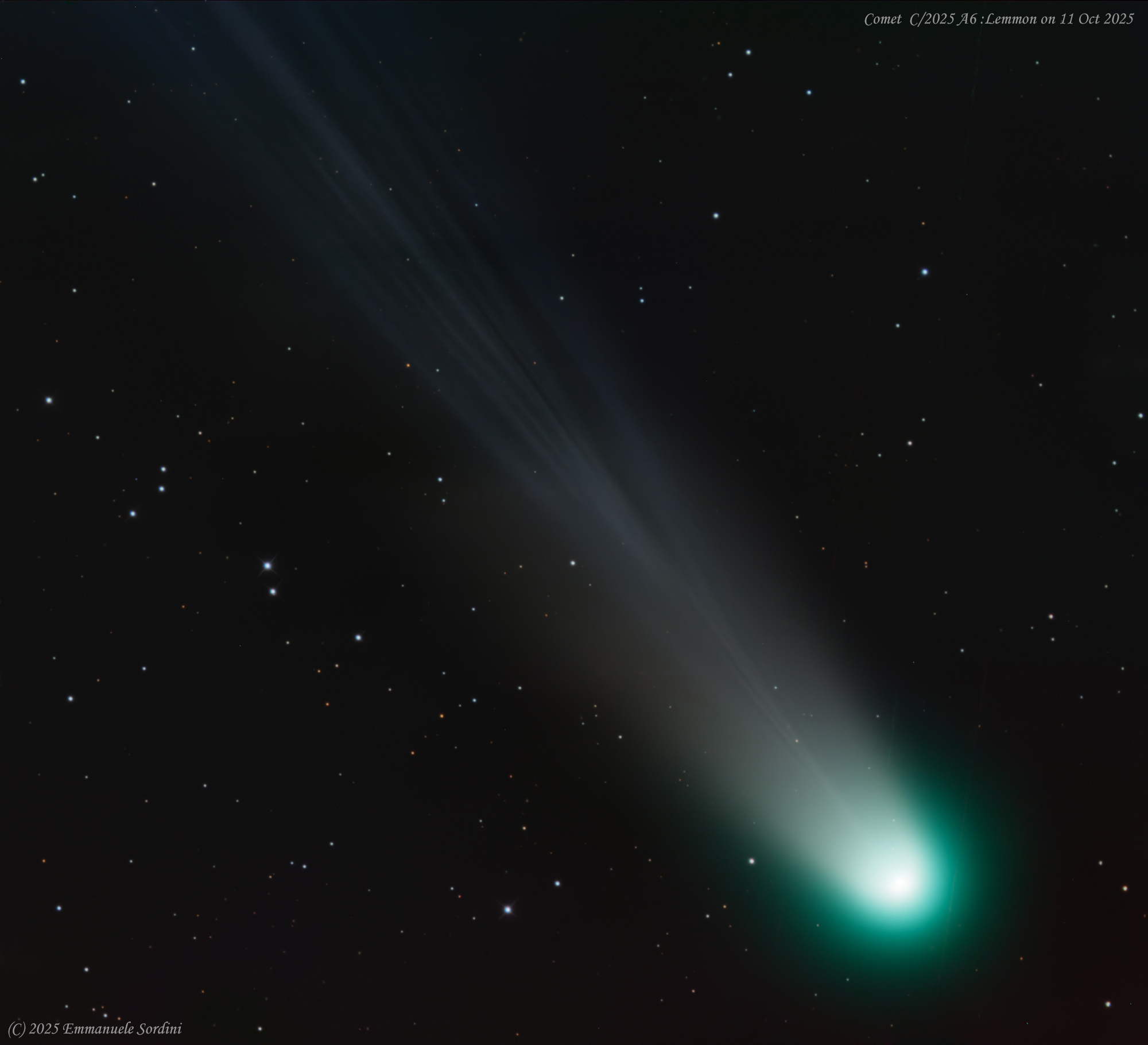
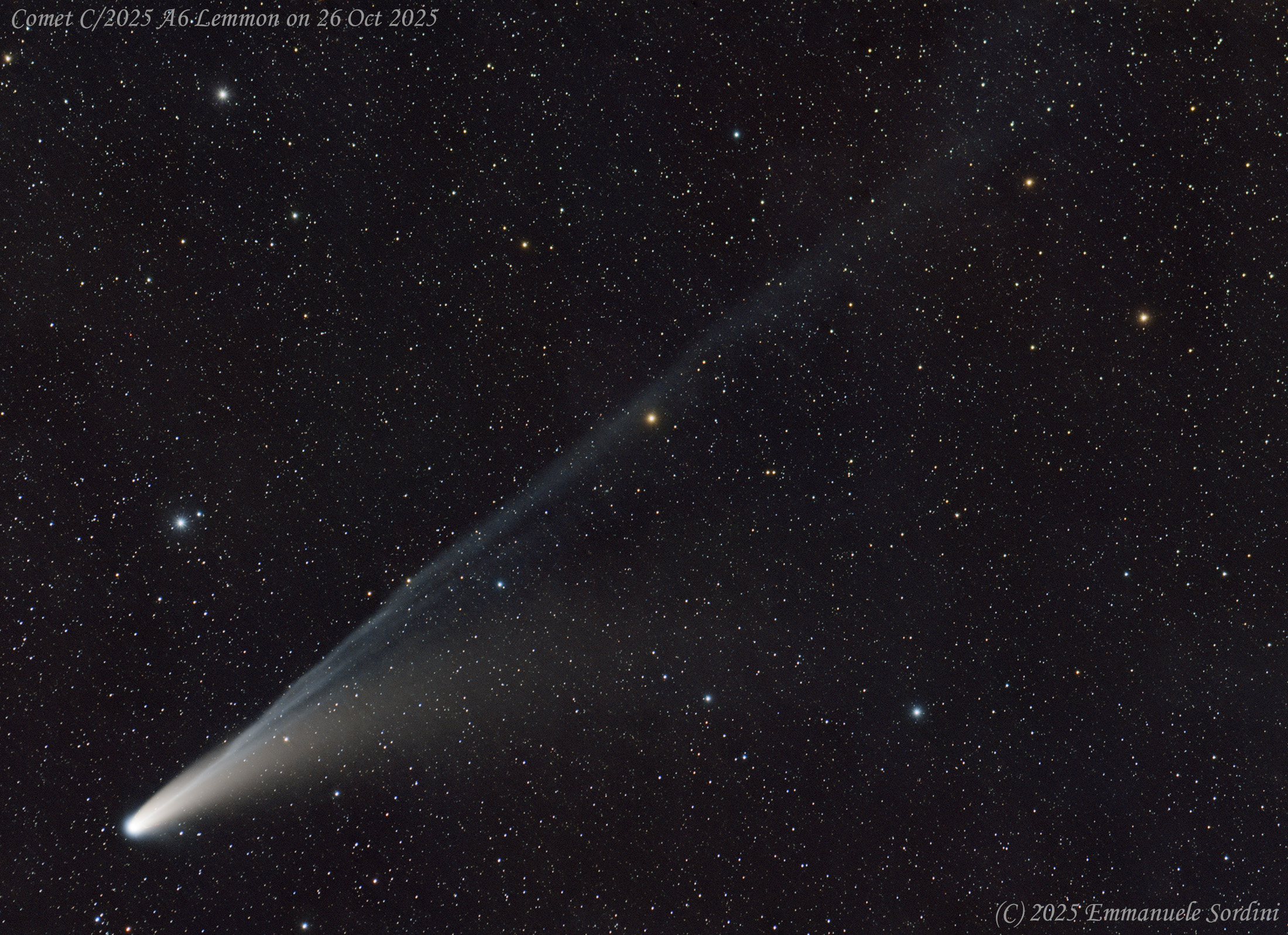
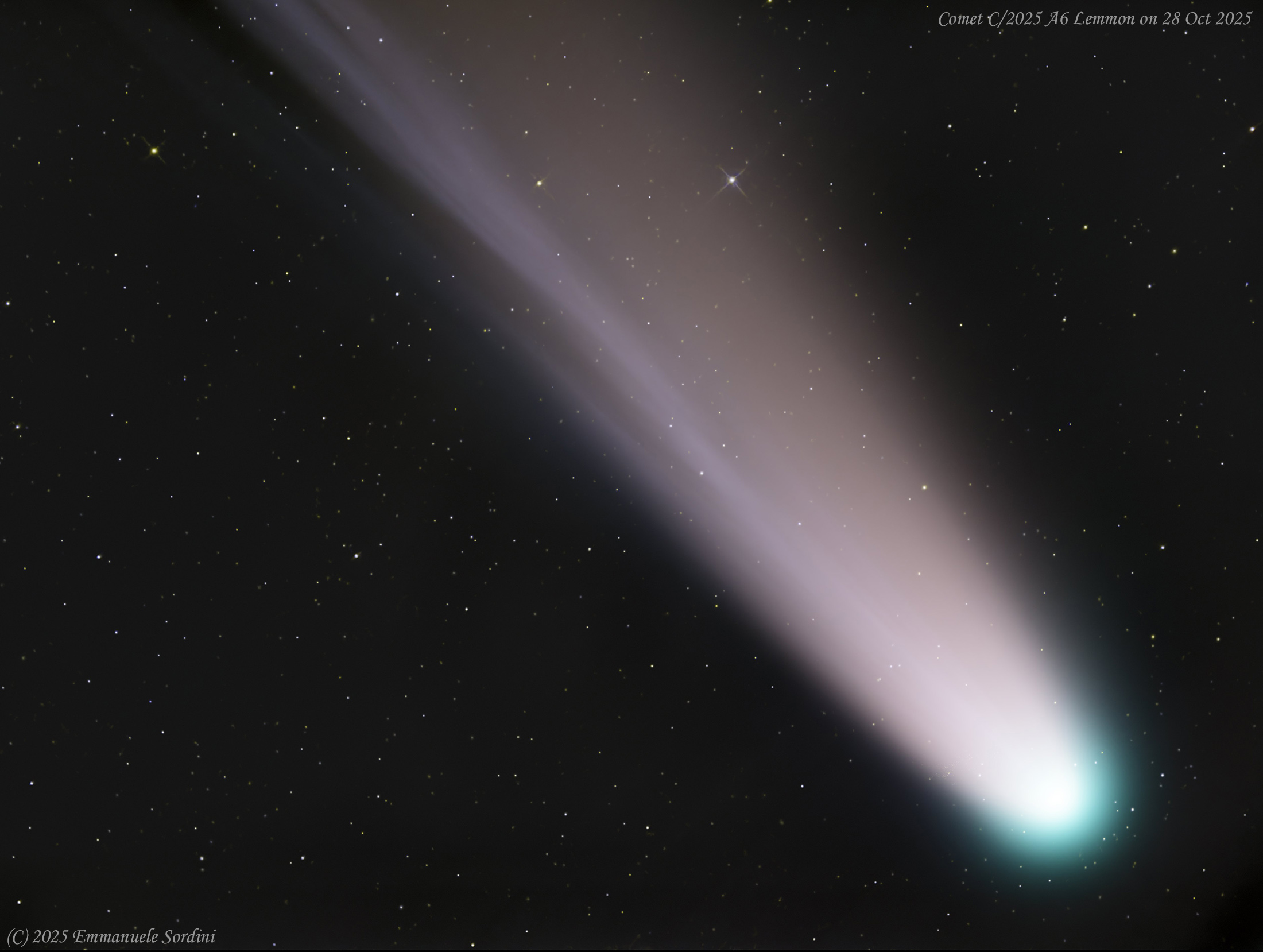
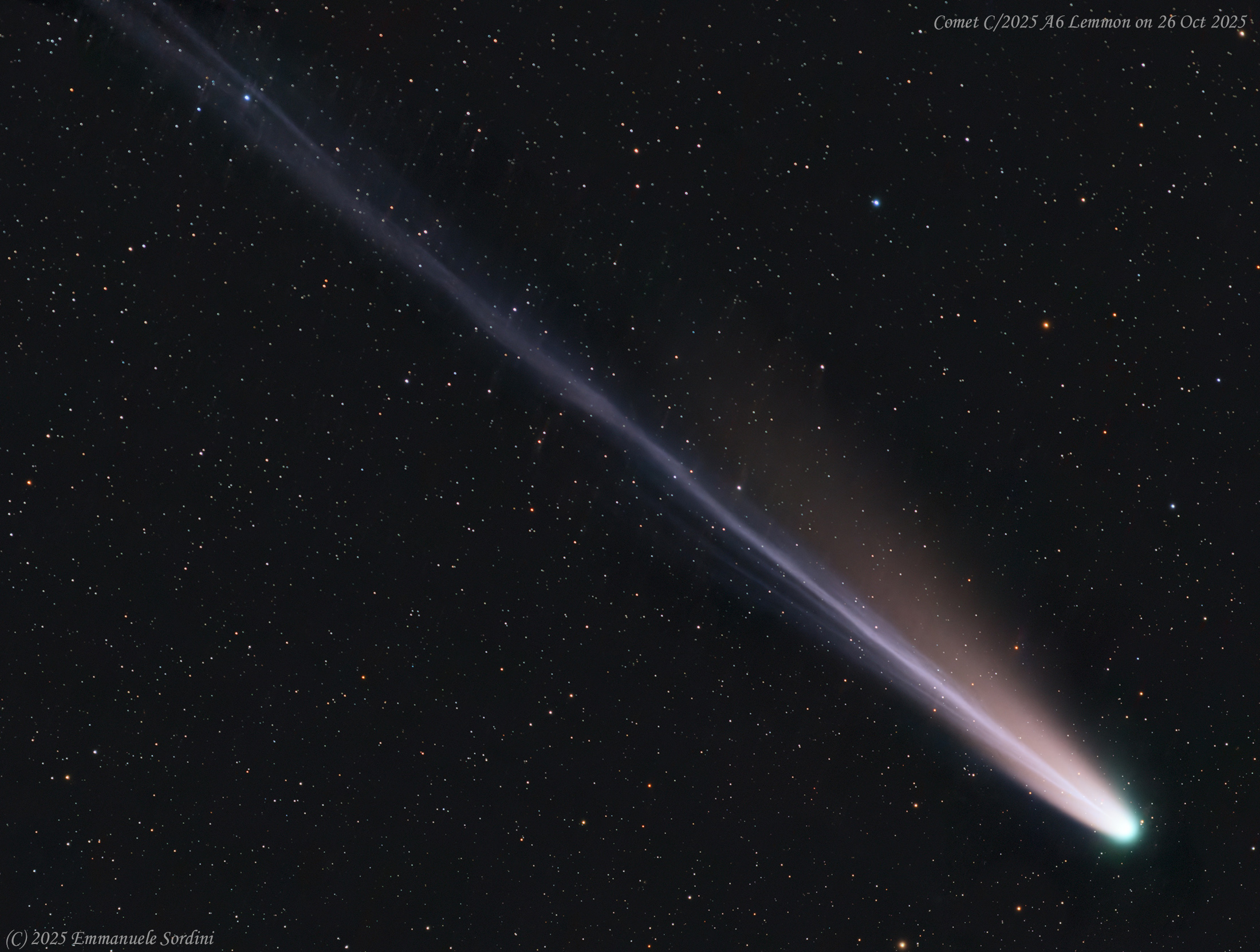
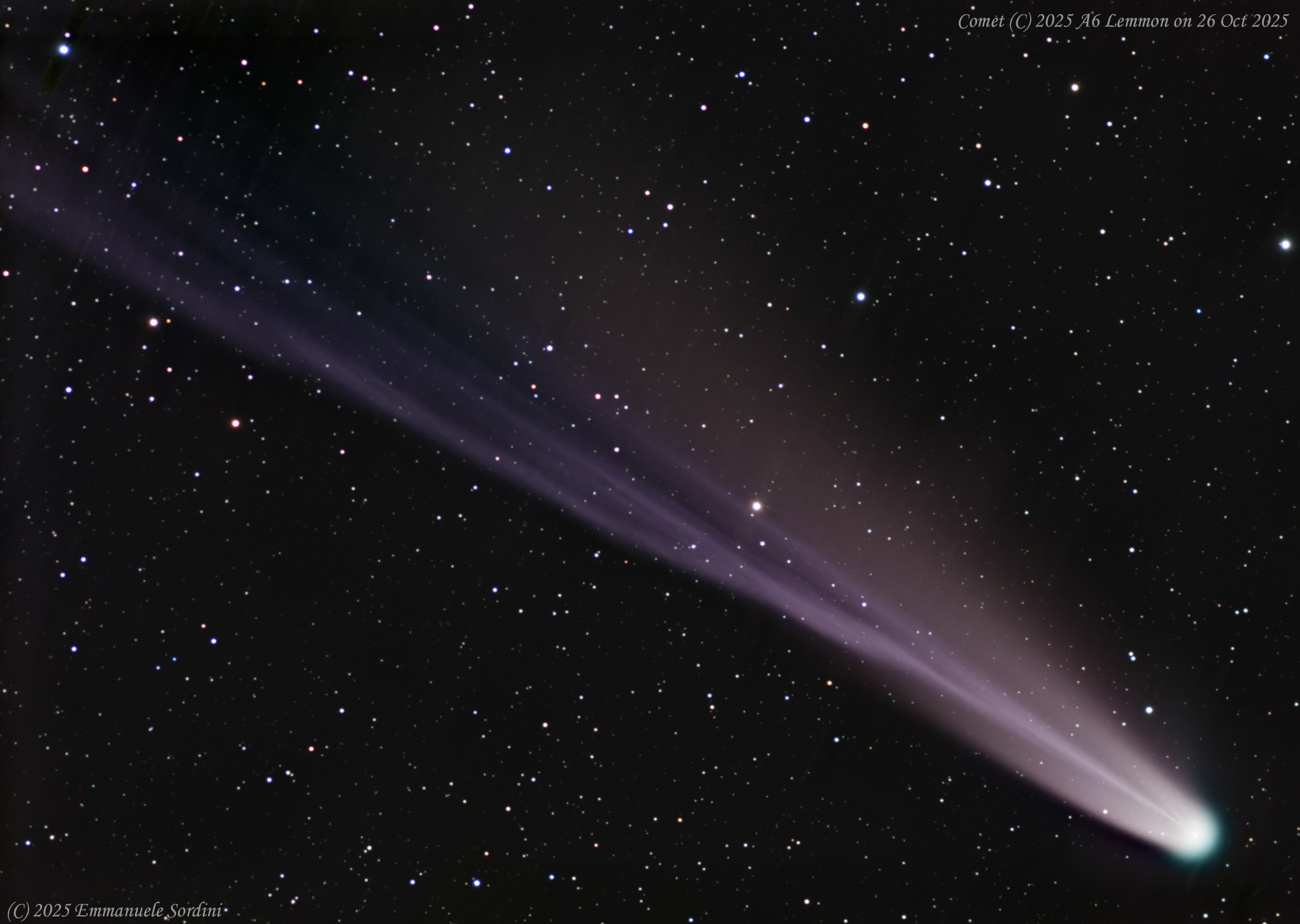
The best period for observing this comet was during the last two weeks of October 2025, when it is estimated to have reached a peak brightness of magnitude 3.7 around 20 October. During this time, it displayed a double tail of dust and ions; the ion tail, blue in color, reached an apparent length of about 10 degrees. This made it an excellent target for medium-to-wide-field photos using DSLR or APS-C CMOS cameras with focal lengths between 135 and 200 mm.
At its brightest, the comet was visible to the naked eye under sufficiently dark skies as a small “puff” low above the horizon. Its tail was never visible without optical aid, but the comet itself stood out clearly from the nearby stars thanks to its diffuse appearance. It was also a very pleasant sight through small telescopes or binoculars.
Lemmon is a comet with a highly eccentric orbit and an extremely long period, about 1,350 years. This suggests that its previous passage occurred in the 7th century AD.
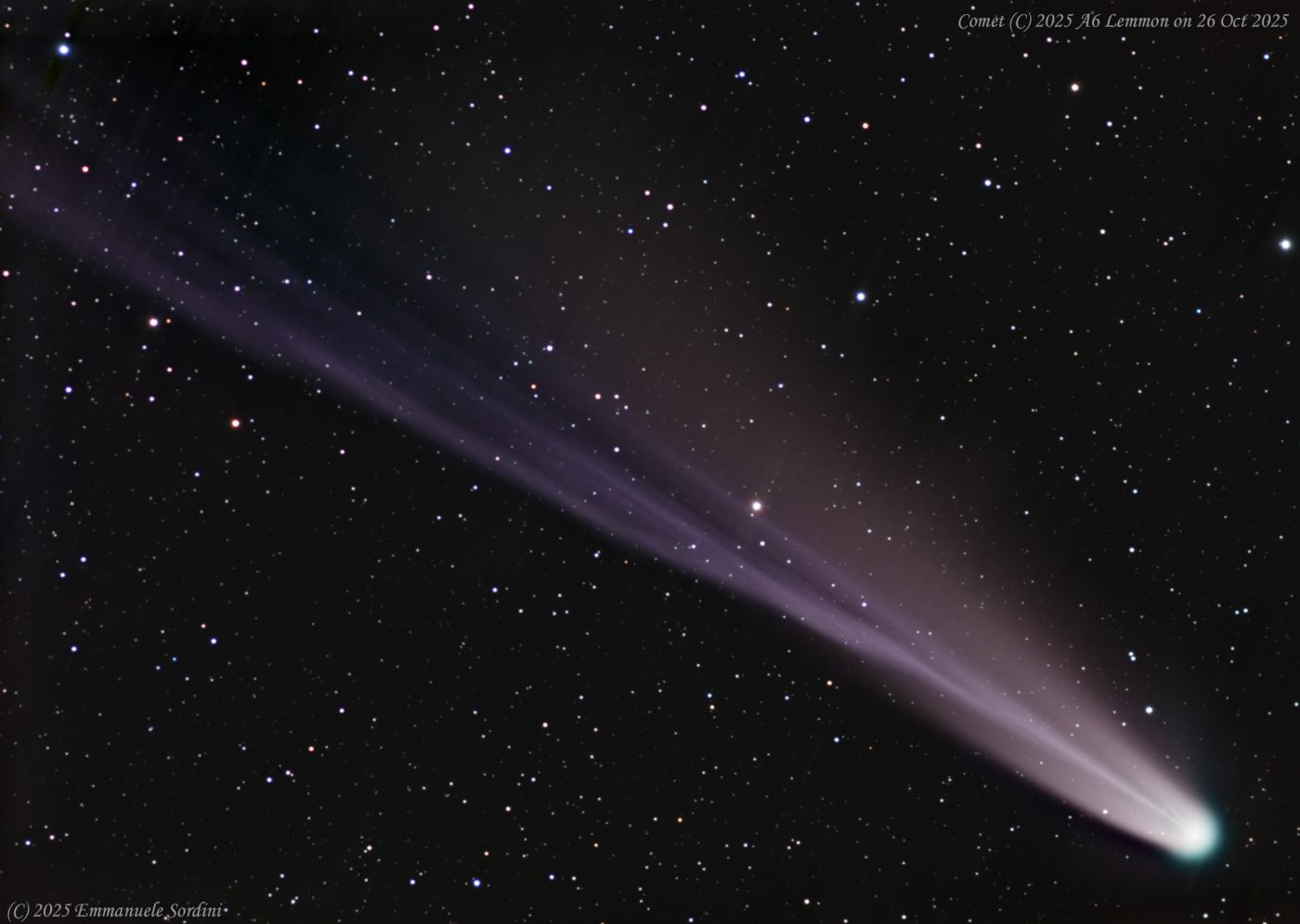
I imaged comet Lemmon between early October and early November on several nights and with a wide array of different optics (ranging from a 135 mm Samyang telephoto lens to a 10-inch RC), cameras (ASI 585 MC, Touptek 2600M, ZWO ASI 2600MM, ZWO ASI 585MC and even a Canon 90D DSLR) and focal lengths, from 135 to 1400 mm. Particularly worth mentioning is the image from 26 October taken with my Canon 90D DSLR and 135 mm Samyang lens, in which the whole of the comet tail fits just nicely along the diagonal of the frame.
I can indeed say I managed to make the most of this comet appearance!
Leave a comment